Why Is My Website Not Showing on Google? 10 Common Reasons & How to Fix Them
One of the most common questions business owners ask after launching a website is, "Why isn't my website showing on Google?" You invest in a professional website, publish your services and expect customers to find you, but when you search your business name or keywords, your website is nowhere to be found. The good news is that this problem is usually fixable. Understanding why Google is not displaying your website is the first step toward improving your online visibility.
1. Your Website Has Not Been Indexed Yet
Google cannot display a website that it has not discovered. Every new website needs to be crawled and indexed before it can appear in search results. If your website was launched recently, Google may still be processing it. Depending on your website and content, indexing can take anywhere from a few days to several weeks.
You can check whether Google has indexed your website by searching site:yourdomain.com on Google. If no pages appear, your website is probably not indexed yet. Submitting your sitemap through Google Search Console can help Google discover your pages much faster.
2. Your Website Blocks Search Engines
Sometimes websites accidentally prevent Google from crawling them. This often happens when developers leave "Discourage search engines" enabled during development or when the robots.txt file blocks important pages. Even a small technical mistake can stop Google from accessing your entire website.
Always verify your robots.txt file, meta robots tags and website settings to ensure search engines are allowed to crawl your content. If Google cannot access your pages, they will never appear in search results.
3. You Have Not Submitted a Sitemap
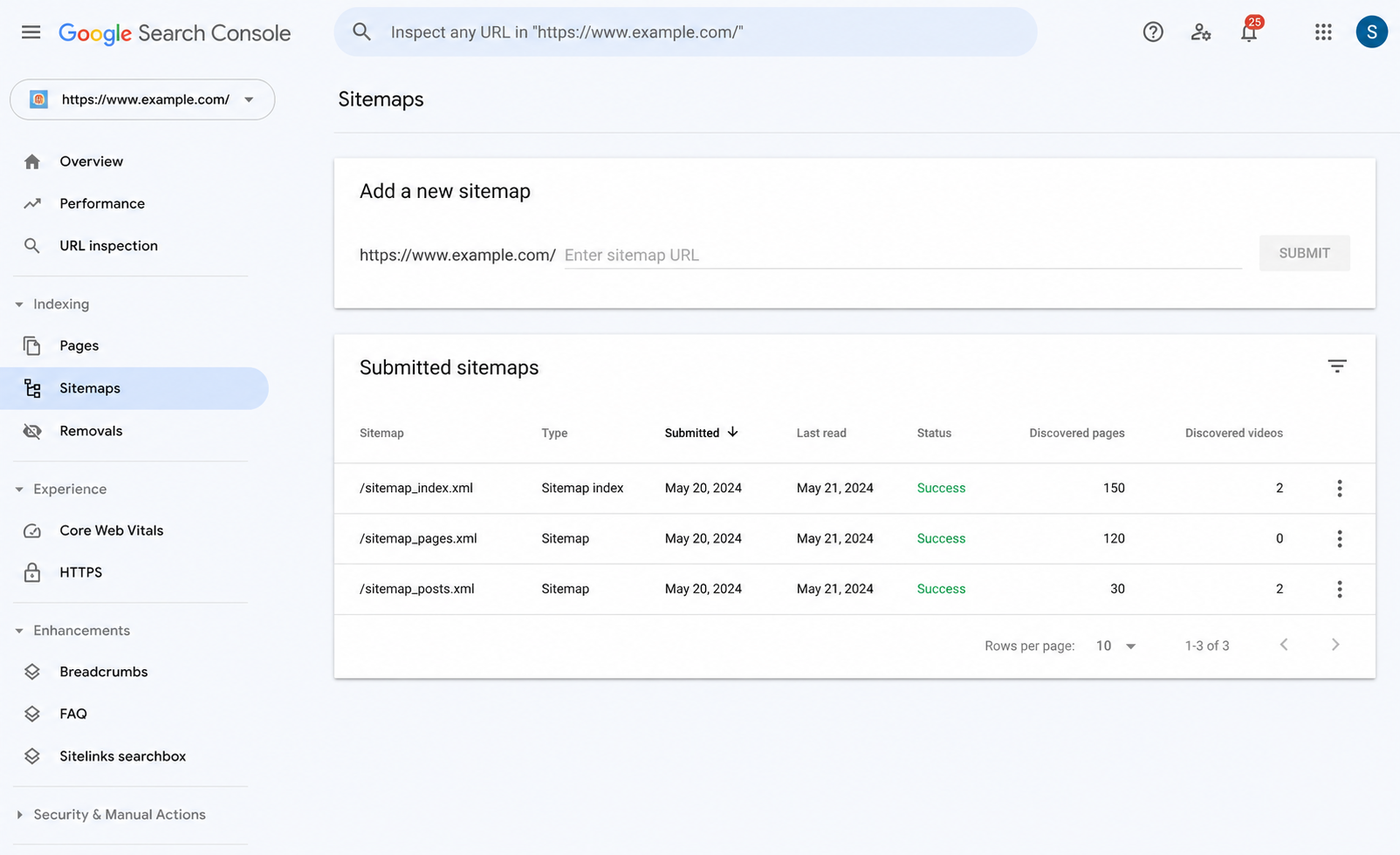
A sitemap acts like a roadmap for Google. It tells search engines which pages exist and helps them crawl your website more efficiently. Although Google can sometimes find pages without a sitemap, submitting one greatly improves the indexing process, especially for new websites.
Most modern websites automatically generate XML sitemaps. Once created, submit the sitemap in Google Search Console so Google can easily understand your site's structure and discover newly published pages.
4. Your Website Has Very Little Content
Google prefers websites that provide useful, original and informative content. If your website only contains a homepage with a few sentences and a contact form, Google may not consider it valuable enough to rank for competitive keywords.
Adding detailed service pages, blogs, FAQs, case studies and location-specific content helps search engines understand your business. The more helpful your content is for users, the greater the chances of appearing in search results over time.
5. Your SEO Is Not Properly Optimized
Search Engine Optimization plays a major role in helping Google understand your website. Missing title tags, poorly written meta descriptions, weak headings, slow page speed and missing keywords all reduce your chances of ranking well.
On-page SEO should include optimized titles, proper heading structure, internal linking, image optimization, mobile responsiveness and relevant keywords that match what your customers are actually searching for.
6. Your Website Is Too New
Many business owners expect their website to appear on Google immediately after publishing it. In reality, Google needs time to crawl, evaluate and understand a new website before it starts ranking it. Even if your website is technically perfect, it may take several weeks before search engines begin showing it for relevant keywords.
During this period, continue publishing quality content, improving your SEO and submitting updated pages through Google Search Console. Consistency is far more effective than expecting overnight rankings.
7. Your Website Is Too Slow
Website speed has become an important ranking factor. If your website loads slowly because of large images, unnecessary plugins, poor hosting or heavy scripts, visitors often leave before the page fully loads. Google notices this poor user experience and may rank faster websites above yours.
Compressing images, enabling browser caching, reducing unused CSS and JavaScript, and choosing reliable hosting can significantly improve loading speed. A fast website not only helps SEO but also increases user satisfaction and conversions.
8. Your Website Has No Authority Yet
Google prefers websites that are trustworthy and well-established. If your website has very few backlinks, no mentions from other websites and limited online presence, Google may not consider it authoritative enough to rank above competitors.
Building authority takes time. Publishing valuable blog content, earning backlinks from reputable websites, maintaining active business profiles and consistently updating your website all contribute to stronger domain authority and better rankings.
9. You're Targeting Highly Competitive Keywords
Trying to rank for broad keywords such as "Digital Marketing" or "Website Design" can be extremely difficult, especially for a new website. These keywords are already dominated by established businesses with years of SEO experience and strong backlink profiles.
Instead, focus on long-tail keywords that match what your ideal customers actually search for. For example, keywords like "digital marketing agency in Sonipat" or "SEO services for small businesses" often have lower competition and higher conversion potential.
10. You Are Not Monitoring Website Performance
SEO is not a one-time task. Many businesses publish a website and never monitor its performance again. Without tools like Google Search Console and Google Analytics, it becomes difficult to identify indexing issues, broken pages, keyword performance or technical errors that may affect rankings.
Regularly reviewing your website's performance helps you understand what is working and what needs improvement. Small fixes made consistently often produce much better long-term SEO results than making large changes only once.
How Digital Meta Monk Helps Businesses Rank on Google
At Digital Meta Monk, we don't just build attractive websites—we build websites that are optimized for search engines from day one. Our SEO approach includes technical optimization, Google Search Console setup, sitemap submission, keyword research, content optimization, page speed improvements and ongoing SEO strategies designed to increase your visibility over time.
Whether your website is completely new or has been online for years without receiving traffic, identifying the root cause is the first step toward improving your Google rankings.
Final Thoughts
If your website is not showing on Google, it doesn't necessarily mean something is seriously wrong. In most cases, the issue is related to indexing, technical SEO, content quality or competition. The sooner these issues are identified and corrected, the sooner your website can begin appearing in search results and attracting potential customers.
SEO is a long-term investment, but when done correctly, it provides consistent organic traffic, stronger brand credibility and higher-quality leads without relying entirely on paid advertising.