How to Do a Competitive Analysis in Digital Marketing (Without Losing Your Mind)

You’re running ads. You’re posting content. You’re doing “all the right things.”
And somehow your competitor is still eating your leads.
That’s not bad luck. That’s you flying blind. You don’t know what they’re doing, so you can’t tell what’s actually working out there. Frustrating, right? Good news — there’s a fix, and it’s simpler than you think: a real competitive analysis in digital marketing.
What Competitive Analysis Actually Is
Forget the fancy definition. Here’s the plain version: it’s spying on your competitors. Legally. Out in the open.
You look at what they’re doing: their ads, their site, their content. Then you figure out what’s working for them. Then you use that.
Here’s what you actually get out of it:
- You learn what strategies work in your specific market. No guessing.
- You get content and campaign ideas without starting from a blank page.
- You make decisions with real data, not a gut feeling at 11pm.
- You move faster because you already know what needs fixing.
But here’s the catch. None of this matters if you just collect the info and sit on it.
Ideation without execution is delusion.
You can build the prettiest spreadsheet of competitor research in the world. If you don’t act on it, it’s just a document. Do the work.
Step 1: Find Your Real Competitors
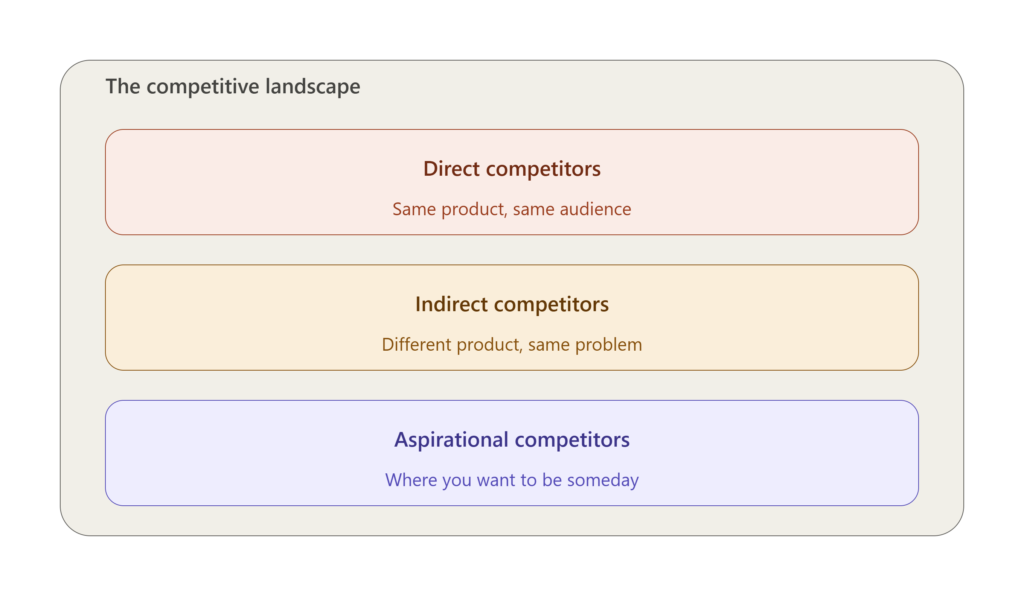
Most people get this wrong right out of the gate. They list every company that’s vaguely in their industry. That’s not helpful. You need three specific types:
- Direct competitors: Same product, same audience. If you sell email marketing software, this is every other email marketing tool chasing your exact customer.
- Indirect competitors: Different product, same problem. Maybe a freelancer doing manual email campaigns instead of using software. Same job, different method.
- Aspirational competitors: The big names you’re not fighting yet, but want to look like one day.
Here’s how you actually find them:
- Open an incognito browser window. Search your target keyword like a customer would.
- Whoever shows up in the organic results? Those are your SEO competitors.
- Whoever’s running ads on that search? Those are your paid competitors.
- Skip the directory sites (Yelp, G2, whatever). They’re not rivals, they’re just lists.
- Go to SimilarWeb.com and paste your domain in. It’ll show you “similar sites.” It’s not perfect data, but it’s a solid starting point.
- Use SEMrush‘s Domain Overview for cleaner numbers on traffic and keywords.
- Check Social Blade (it’s free) to see how their social accounts are actually performing.
Step 2: The 4-Layer Framework
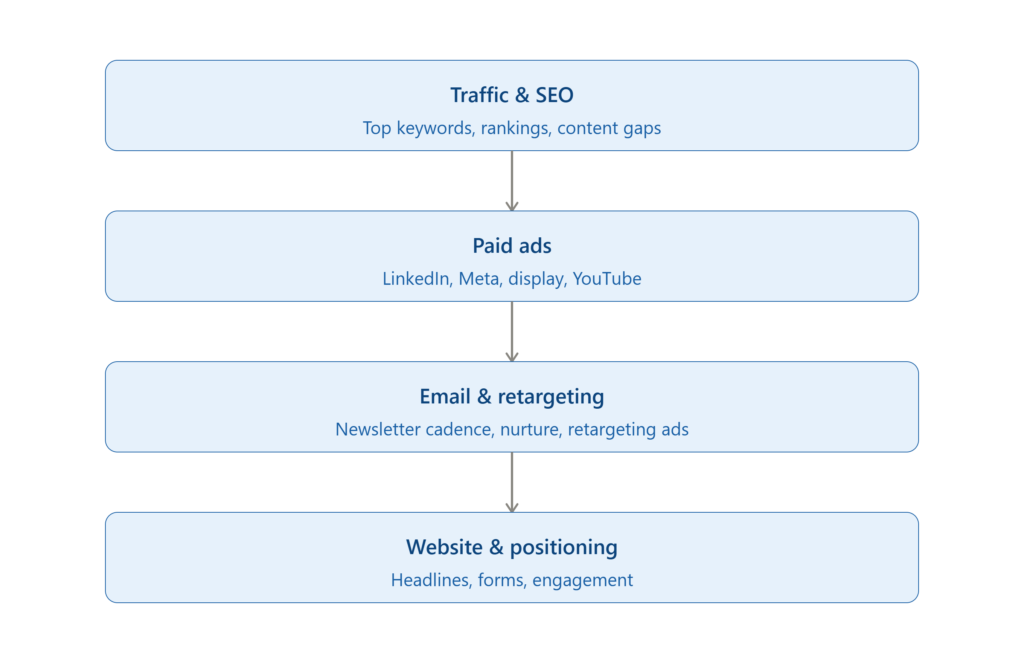
Once you know who you’re up against, you need to know what to actually look at. Don’t just scroll their homepage and call it research. Go through these four layers.
Layer 1: Traffic & SEO
- Use an SEO tool to find the exact keywords sending them traffic.
- Check where they rank and where they don’t. Those gaps are your opportunity.
- Run a quick SEO audit on their site. Look at page speed, site structure, and content depth.
Layer 2: Paid Ads
- Check the LinkedIn Ad Library to see every active sponsored post a company is running. This is huge for B2B.
- Check Meta’s Ad Library for their Facebook and Instagram creatives, copy, and offers.
- Look at their display ads, YouTube ads, and any ad network placements you can spot.
- Pay attention to their offer type. Free trial? Demo? Whitepaper? A “book a consultation” button? That tells you where they think their buyer is in the decision.
Layer 3: Email & Retargeting
- Sign up for their newsletter. Yes, actually do it.
- Watch how often they email you, what they push, and how the nurture sequence builds.
- Browse their site once, then watch your feed. If retargeting ads start following you around, take notes on the creative and messaging.
Layer 4: Website & Positioning
- Read their homepage headline. What problem are they claiming to solve? What’s the promise?
- Fill out their contact form yourself. How long until someone responds? Is it a real human or a bot?
- Check their social engagement. Are people actually commenting, or is it just likes from bots and employees?
Step 3: Build Your Action Plan
This is the part everyone skips. Don’t be everyone.
- Find the gaps. Where’s their content thin or outdated? That’s your opening.
- Build your own message. Don’t copy what they’re saying. Highlight what makes you different. Copying gets you ignored. Differentiating gets you remembered.
- Set up a tracking dashboard. A simple spreadsheet works fine. Update it every quarter, because B2B strategies shift fast and last quarter’s playbook goes stale.
- Shift your mindset. Stop seeing competitors as threats. See them as free research. They’re already testing what works so you don’t have to guess.
The Bottom Line
A competitive analysis in digital marketing isn’t a one-time report you file away. It’s a habit. Check in every quarter. Adjust. Repeat.
Your competitors aren’t your enemies. They’re showing you, for free, what your market actually responds to. Use that.
At Digital Meta Monk, we run competitive analysis as part of every growth strategy we build. If you want a team that turns research into revenue instead of a spreadsheet nobody opens again, book a free consultation at digitalmetamonk.com.